
0%


On the edge of Bodmin, where the Cornish landscape opens toward moorland and the weather can turn a clear afternoon into a veil of damp grey, Bodmin Gaol rises with an uncompromising weight. Built from local granite, its walls do more than contain a historic prison. They hold sound, redirect footsteps and make even an ordinary corridor feel watchful. The site is now a historical attraction with tours, exhibitions and paranormal experiences, but its atmosphere does not depend entirely on theatrical lighting or a well-told ghost story. The architecture itself carries the evidence of confinement.
Visitors commonly describe cold spots, unusually heavy air, sudden dread and whispers that seem to come from beyond an empty cell. Such accounts belong to the realm of reported experience, not established fact. Yet they need not be treated as either proof of spirits or meaningless invention. When visitor testimony is considered alongside Georgian penal design, Victorian discipline, surviving registers and the physical behavior of granite chambers, a more unsettling picture emerges. The haunting aura of Bodmin is rooted in a documented history of deprivation, punishment and death, while the building supplies natural conditions capable of shaping what people hear, feel and remember.
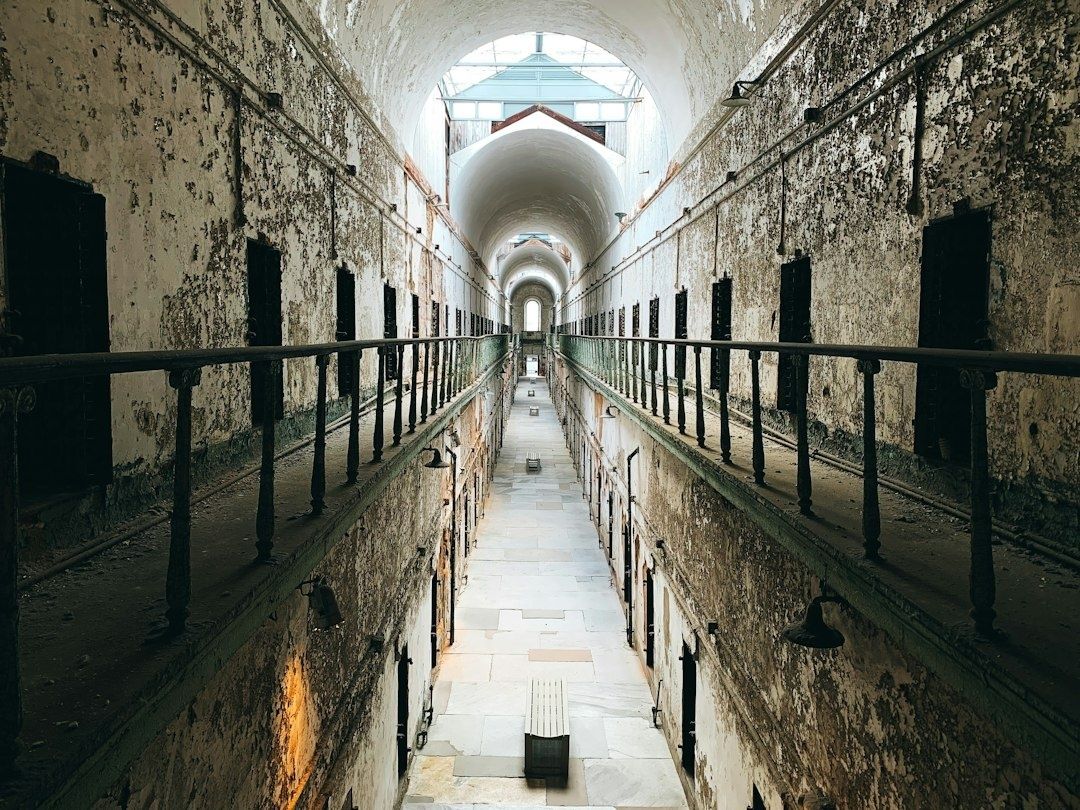
Bodmin Gaol was built in 1779 during a period when prison reformers were challenging the disorder, disease and arbitrary cruelty associated with older lockups. John Howard”s influential principles emphasized inspection, sanitation, separation and improved ventilation. Individual cells and regulated spaces were intended to impose order while, at least in theory, reducing the corruption and violence produced by overcrowded communal rooms. The Georgian blueprint therefore represented a reforming ambition, even if the realities of imprisonment rarely matched the ideals drawn on paper.
The prison”s layout made behavior visible and movement controllable. Thick walls, narrow openings, cell blocks and carefully managed routes created a system in which prisoners could be isolated, watched and processed. Such arrangements may appear humane when compared with earlier conditions, but separation also carried a psychological cost. Light, conversation and ordinary human contact were restricted, particularly for people placed under disciplinary punishment. A building designed to reduce disorder could consequently produce an intense sense of silence, surveillance and emotional pressure.
As the nineteenth century progressed, early humanitarian language gave way to the harder institutional culture associated with Victorian imprisonment. Overcrowding, hard labor, strict routines and punitive regulations altered how the gaol functioned. Bodmin developed from a county prison and lockup into a more complex civil facility connected to the administration of courts, punishment and public order. The broader history of the building is outlined in accessible form by this historical overview of Bodmin Jail, while local records and prison material offer a more detailed route into individual lives, sentences and institutional decisions.
That development matters when assessing paranormal claims. A cell block is not simply an old room with a reputation. It is a controlled environment shaped by repeated routines, enforced silence, labor and fear. The echoes of boots, keys and doors were once ordinary sounds of authority. Even after those activities ceased, the geometry remained. A modern visitor entering by lantern light encounters a space whose proportions were created to regulate human beings, and the body often registers that history before the mind has put it into words.
Reports of rhythmic pacing and muted metallic clangs have a particularly strong fit with the building”s documented uses. Prison life depended on repeated movement, timed labor, barred doors and controlled access. A treadwheel, associated with nineteenth-century hard labor, could create a regular mechanical rhythm that stayed in the memory of a place even when the machinery itself was no longer operating. That does not demonstrate a residual sound or an apparition. It does suggest that the reported character of some experiences may be influenced by architecture that once amplified repetitive labor and institutional noise.
Researchers should also distinguish between the popular vocabulary of haunting and the language of historical records. The former speaks of footsteps, voices and unseen presences. The latter records punishments, transfers, petitions, illness, deaths and administrative decisions. Cornish holdings include Bodmin prison registers, prisoner lists, correspondence, hospital transfers and printed prison material, making archival research essential before attaching a dramatic story to a particular cell or corridor. The Crime, prisons and punishment guide from The National Archives explains how researchers can locate relevant records across prison, court and punishment collections.
| Reported encounter | Historically grounded possibility | Careful interpretation |
|---|---|---|
| Rhythmic footsteps or pacing | Repeated prisoner movement, guard patrols or labor routines | Compare timing, direction and acoustics before proposing an anomalous cause |
| Muted metallic clangs | Keys, bolts, barred doors and other prison hardware | Test whether sound travels from another occupied area or reflects through stone |
| Heavy air and sudden dread | Restricted ventilation, darkness, damp and the psychological effect of confinement | Record temperature, humidity, airflow and personal expectation |
| Nausea or intense discomfort | Solitary punishment, sensory deprivation, stale air or stress responses | Treat the sensation seriously without treating it as automatic evidence of a presence |
Solitary cells deserve particular caution. Spaces designed to remove stimulation can produce powerful bodily reactions in visitors who enter them briefly, especially in darkness or under guided suggestion. A sense of pressure, nausea or dread may arise from restricted air movement, low light, posture, anxiety and the knowledge of what the room was used for. The historical reality is not weakened by a physiological explanation. On the contrary, the knowledge that sensory deprivation was an intentional instrument of discipline gives those reactions a more precise and troubling context.
The execution areas occupy a special place in Bodmin”s folklore because they combine public memory, legal authority and death in a single architectural setting. During the nineteenth century, a long-drop gallows pit was introduced, associated with the execution methods developed by William Marwood. Such a structure was designed to make hanging more efficient and controlled, but its practical purpose does not remove its emotional force. The pit, gallows and surrounding walls created a theatre of punishment in which the final moments of condemned people were made visible to officials, witnesses and, in earlier periods, wider crowds.
Public execution sites tend to generate durable local traditions because stories are repeated across generations, often long after precise details have blurred. A whispered account of a condemned prisoner, a remembered name or a tale of a figure seen near the gallows can become attached to the building”s physical features. Visitors arrive already aware that they are approaching a place associated with death, and expectation can sharpen attention to every draft, shadow and distant sound. This does not make an experience fraudulent. It means that perception is taking place within a powerful historical and psychological frame.
Acoustics provide another layer. Subterranean spaces, shafts, vents and uneven masonry can channel air and produce pressure changes. Large stone surfaces reflect low-frequency sound, sometimes creating the impression that a noise is closer, deeper or more directionless than it really is. Infrasound, meaning sound below the usual range of human hearing, is often invoked in paranormal discussions, but claims about it should be measured rather than assumed. A proper investigation would need calibrated equipment, repeatable readings and control comparisons. Natural airflow and acoustic reflection are more immediate explanations for many cold sensations, low rumbles and indistinct whispers.
A nocturnal investigation at Bodmin should begin with permission, clear boundaries and an understanding that the gaol is a heritage site rather than an abandoned playground. Organized experiences may include guided ghost walks or specialist investigations, but the exact availability of events varies throughout the year. While the attraction is open daily for daytime heritage visits and immersive Dark Walk tours, evening access operates on separate timetables, so visitors should check the official Bodmin Jail website directly for seasonal ghost hunt and after-hours investigation schedules before making plans. Rules concerning access, photography, movement between areas and equipment must take priority over the pursuit of dramatic footage.
Equipment can help, but it cannot replace disciplined observation. A temperature meter may reveal a real variation without explaining its cause. An audio recorder may capture interference, distant conversation or handling noise. A motion sensor may respond to airflow, vibration or an insect. The strongest fieldwork therefore records conditions before interpretation and treats an unexplained result as an invitation for further testing rather than a verdict.
Safety remains part of credibility. Granite floors can be uneven, low light can conceal steps and damp conditions can make surfaces slippery. Visitors should remain with their group, carry only permitted equipment and avoid touching historic fabric. Strong physical symptoms, including dizziness, nausea or breathing difficulty, should be treated as health concerns first. No paranormal explanation should delay leaving a room, seeking assistance or reporting a hazard.
Most importantly, the dead should not be reduced to props. The people held at Bodmin were prisoners, defendants, debtors, patients, workers and condemned individuals whose lives were shaped by poverty, law, illness and institutional power. A careful investigator can remain open to uncertainty while refusing to turn suffering into spectacle. The most respectful question is not simply, “What spirit is here?” It is, “What happened here, and what evidence survives?”
Bodmin Gaol”s enduring reputation becomes more intelligible when three forms of evidence are read together. Penal ledgers reveal the routines and punishments that gave the building its human meaning. Architectural study explains why sound, temperature and airflow behave strangely in enclosed granite spaces. Visitor accounts preserve the emotional response produced when modern bodies encounter cells, corridors and execution areas shaped by coercion. None of these strands alone proves a haunting, but together they explain why the site can feel charged long before anything unusual is reported.
The deeper power of Bodmin lies in what remains tangible. The walls still define the routes of confinement, the chambers still suggest enforced isolation and the execution spaces still connect the present with a legal culture that treated public suffering as punishment. Walk the corridors with a torch, a notebook and an open but questioning mind. Listen carefully, test ordinary explanations and leave room for uncertainty. The most haunting presence may not be a spectral figure at all, but the undeniable weight of human history held in stone.