



The Shadowed Moorland Horizon
After sunset, Cornwall”s uplands acquire a different character. Granite tors become black silhouettes, heather absorbs the last traces of colour, and old mining ground can seem to continue beyond the reach of a torch. The atmosphere is undeniably suited to folklore, from stories of restless miners to legends attached to lonely tracks and abandoned workings. Yet the same darkness that deepens a place”s mystery also conceals its most immediate dangers. Uneven ground, sudden fog, livestock, open water, and unstable industrial remains do not announce themselves with theatrical timing.
Standard amateur ghost-hunting routines often assume a controlled location: a building with walls, a known entrance, and a predictable route back to the vehicle. Open moorland offers none of those conveniences. A stationary vigil can leave a team exposed to cold, while a short movement between observation points may cross a shaft, boggy hollow, or private land. Credible investigation therefore begins before any recorder is switched on. Access, navigation, weather, equipment discipline, and emergency planning must come first, allowing historical curiosity and paranormal questions to remain secondary to sound fieldcraft.
Access Rights and Moorland Stewardship
Across Bodmin Moor, a public right of way and open access land are not interchangeable concepts. A public footpath provides a defined route, while access land may allow people to walk more freely within mapped areas, subject to restrictions and local conditions. Before planning a night movement, study current mapping rather than relying on a remembered daytime walk. The official guidance on Countryside access land explains the importance of responsible behaviour and points visitors towards the relevant access information and Countryside Code.
The moor is not an empty stage prepared for investigation. It is working countryside, supporting grazing, farming, conservation, and rural livelihoods. Ponies and livestock may be encountered in darkness, and their reactions can be unpredictable when approached by people carrying lights or unfamiliar equipment. Keep dogs under close control where they are permitted, avoid separating animals from one another, and never feed, chase, surround, or photograph livestock at close range. Gates should be left exactly as found, boundaries should not be climbed without necessity, and temporary markers should never be fixed to walls, vegetation, or historic features.
A fixed vigil creates a different level of responsibility from passing along a route. Several people remaining in one place for hours may block a track, disturb grazing patterns, attract attention from nearby residents, or create a fire and litter risk. Obtain landowner or occupier permission wherever the activity involves prolonged stationary observation, equipment deployment, vehicles, lighting, or repeated visits outside ordinary access rights. Keep the group small, set a clear departure time, and remove every item brought onto the moor. Respect for access is not merely courteous; it protects the future ability of researchers to work in places where local trust is already hard won.
- Check the legal status of the planned route and confirm whether any restrictions apply.
- Tell a responsible person the exact area, intended route, group size, and return time.
- Close gates, avoid livestock, and keep well clear of working vehicles and agricultural activity.
- Do not enter mine buildings, shafts, fenced compounds, or private land without explicit permission.
- Leave no tape, chalk, food, batteries, packaging, or temporary equipment behind.
Hidden Mine Shafts and Ground Hazards
Cornwall”s mining landscape is layered beneath gorse, heather, turf, and spoil. Centuries of tin and copper extraction left adits, shafts, pits, trenches, engine-house ruins, and waste tips across parts of the county. Some features are obvious on a daylight walk; others are reduced to a depression, a change in vegetation, or a dark gap concealed by scrub. Old collar timbers and masonry may have weakened beyond visual judgment. A surface that appears solid can fail under a person”s weight, especially around subsidence, spoil edges, and waterlogged ground.
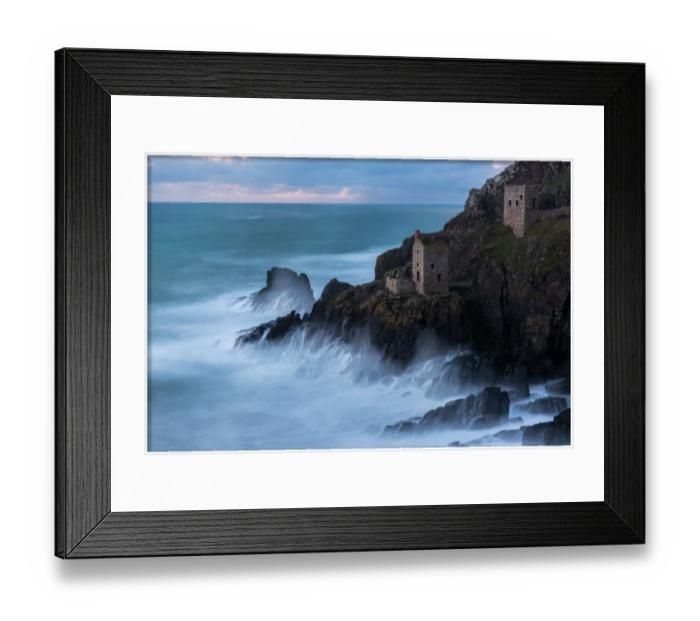
Navigation across such terrain requires deliberate pacing rather than confidence in a powerful torch. The following comparison helps explain why different landscapes demand different precautions.
| Terrain | Primary night risks | Safer field approach |
|---|---|---|
| Granite tors and open moor | Loose rock, sudden drops, boulder gaps, steep slabs, and confusing silhouettes | Use a mapped route, slow down near rock bands, and keep hands free for balance |
| Historic mining ground | Unmarked shafts, unstable spoil, hidden voids, collapsed structures, and contaminated water | Remain on confirmed routes, keep away from edges, and never cross a feature simply because it appears shallow |
| Gorse, heather, and wet hollows | Concealed holes, boggy ground, snagging vegetation, and ankle injuries | Use spaced walking, probe only where appropriate with a proper tool, and retreat if the ground becomes uncertain |
For a dark crossing over overgrown spoil, establish the route in daylight and record identifiable attack points, handrails, and catching features. At night, walk in a compact but non-touching formation, with the lead navigator setting a pace that allows each person to place a foot deliberately. Stop before suspected workings rather than at their edge. Confirm direction with a magnetic compass and map, measure distance by pacing or timing, and use the agreed route back instead of improvising toward a distant light. If the surface changes unexpectedly, the correct response is to halt, mark the last confirmed position mentally or on the map, and relocate before continuing.
Microclimates and Contingency Protocols
High ground can lose its landmarks with startling speed. Maritime hill fog may roll across a ridge, while wind-driven rain turns a familiar tor into an indistinct mass. In poor visibility, a headlamp beam can create the illusion of movement as droplets cross the light, and voices may travel strangely across open slopes. Do not interpret these effects as evidence of an unusual presence until ordinary atmospheric explanations have been recorded and tested. Fog also makes navigation genuinely hazardous by removing the visual confirmation that normally supports a compass bearing.
Cold is equally serious during a vigil because investigators often stand still for long periods. Damp clothing, wind exposure, fatigue, and reduced movement can produce dangerous cold-soak even when the initial evening temperature seems tolerable. A person becoming quiet, clumsy, confused, or unusually reluctant to move should be treated as a welfare concern, not as a participant experiencing a compelling atmosphere. End the investigation early if conditions deteriorate. A compelling recording is never worth extending exposure on an isolated moor.
Every team should carry a navigation kit that remains usable when electronics fail or batteries become wet. A magnetic sighting compass, a laminated 1:25,000 map, spare lighting, insulation, food, water, and a basic first-aid kit are fundamental. A navigation course such as the NNAS Silver standard emphasises bearings, pacing, contour interpretation, attack points, handrails, catching features, relocation, and obstacle avoidance. Those are not decorative skills for serious fieldwork; they are the methods that prevent a team from mistaking a vague sense of direction for a safe route home.
- Before departure, nominate a leader, a rear member, and an emergency contact who holds the route plan.
- Set a turnaround time that applies regardless of whether the investigation has produced results.
- At the first sign of disorientation, stop moving, shelter from wind, and establish the last confirmed location.
- Use the map and compass to relocate rather than splitting the group or sending individuals to search.
- If the team cannot make safe progress, contact emergency services with the grid reference, injuries, clothing, equipment, and intended route.
When disorientation, severe weather, or injury overwhelms the planned response, follow established emergency procedures and provide clear location information. Background information on the historic Cornwall Search and Rescue Team-whose operational duties were subsequently divided between the East Cornwall Search & Rescue Team (covering Bodmin Moor) and the West Cornwall Search & Rescue Team-can help investigators understand the wider voluntary rescue framework, but no online reference replaces an emergency 999 or 112 call when life or health is at risk. Keep phones protected and charged, and remember that a signal cannot be assumed in every hollow or behind every tor.
Dark Sky Etiquette and Equipment Protocols
Darkness is part of the environment being observed, not an inconvenience to be defeated. Red light can help preserve night vision, but it should still be used sparingly and pointed at the ground rather than across the horizon. White beams, vehicle headlights, flashing screens, and repeated torch sweeps can disturb wildlife, alert nearby residents, and alter the behaviour of anyone present. Light also creates sensory bias within a team: a moving branch, reflective stone, or animal eye can become a dramatic event when illumination is abrupt and poorly controlled.
Evidence gathering benefits from the same restraint. Establish an equipment baseline before beginning, note the weather and nearby sources of sound, and record when a thermal camera, electromagnetic meter, or audio recorder is activated. Do not announce a suspected result during the recording if that might influence other participants. Audio operators should log aircraft, engines, voices, wind, water, and handling noise. Thermal anomalies require consideration of rock, livestock, people, damp surfaces, and changing air currents before paranormal interpretations are entertained.
- Red-beam headlamps with spare batteries, plus one brighter emergency light per person
- Laminated map, magnetic compass, whistle, power bank, and waterproof phone protection
- Warm layers, waterproof outer clothing, hat, gloves, food, water, and a survival shelter
- First-aid supplies, personal medication, and a written emergency contact plan
- Audio recorder, spare storage, notebook, time-synchronised watch, and weather log
- Thermal or electromagnetic equipment used with documented settings and baseline readings
- Waste bag and a means of carrying every item safely back out
Mastering the Moorland Vigil
A night investigation on Cornwall”s moors should bring together two forms of attention. The first looks backward, towards mining history, local testimony, chapel traditions, and the stories that give a place its haunted reputation. The second looks outward, towards weather, terrain, animals, access rights, and the condition of the people standing in the dark. Neither should be sacrificed to the other. Historical curiosity becomes more meaningful when it does not damage the landscape that preserves the history.
Preparation also strengthens credibility. A team that records its route, conditions, equipment settings, interruptions, and ordinary explanations can assess an experience honestly, whether the final evidence supports a paranormal claim or not. The moorland does not need theatrical treatment to feel uncanny. Its granite, fog, abandoned workings, and deep silence already carry a powerful presence. Approach with permission, navigate with discipline, and leave the living landscape undisturbed. The echoes of the past are worth seeking, but they should never be pursued at the cost of the present.